Professional concrete contractors approach sealing as a critical step in preserving durability, appearance, and long-term performance. Concrete is valued for its strength and versatility, but without proper sealing, it becomes vulnerable to moisture, wear, and environmental damage. With the right process, a concrete contractor makes sure concrete surfaces remain strong, functional, and visually appealing for years.
Why is Concrete Sealing Important?
Protection Against Environmental Elements
Sealing creates a barrier against rain, sunlight, and temperature fluctuations that can weaken concrete over time. Water penetration is especially damaging, as freeze-thaw cycles can lead to cracking and surface deterioration. UV exposure can also cause fading and surface breakdown.
Sealants protect against oil, grease, and chemical spills by creating a non-permeable layer. This prevents contaminants from penetrating the surface and causing structural damage. Contractors select sealers based on environmental exposure, ensuring year-round protection in both residential and commercial settings.
Enhancing Concrete Durability
While concrete is naturally strong, sealing significantly extends its lifespan. A properly applied sealer reduces surface wear, cracking, and degradation caused by traffic and impact. This added protection is especially important for driveways, walkways, and high-use areas.
Sealants also improve resistance to abrasion and stress from daily use. By reinforcing the surface, contractors help maintain structural stability and reduce the likelihood of costly repairs. This makes sealing a practical investment for long-term performance.
Preventing Stains and Discoloration
Concrete’s porous nature makes it susceptible to stains and discoloration. Sealing blocks contaminants from penetrating the surface, making spills easier to clean and preserving the original appearance.
UV-resistant sealers help maintain color consistency, especially in areas exposed to direct sunlight. Contractors may also use finishes that enhance the look of the surface, such as matte or glossy coatings. This combination of protection and visual improvement adds value to the property.
What is the Process of Sealing Concrete?
Surface Cleaning and Preparation
Proper preparation is essential for effective sealing. Contractors begin by cleaning the surface to remove dirt, oil, and debris that could interfere with adhesion. Pressure washing is commonly used for thorough cleaning.
Cracks and imperfections are repaired before sealing to create a smooth, uniform base. The surface must then dry completely to prevent moisture from being trapped beneath the sealer, which can cause peeling or bubbling. In some cases, grinding or light abrasion is used to improve adhesion.
Choosing the Right Sealer
Selecting the correct sealer depends on the type of concrete, environmental conditions, and desired finish. Penetrating sealers offer strong moisture resistance, while acrylic sealers enhance appearance and provide UV protection.
Contractors evaluate each project to determine the best option, considering factors like traffic levels, exposure, and performance requirements. The right choice guarantees both durability and visual appeal, tailored to the specific application.
Application Techniques
Applying the sealer requires precision and the right tools. Contractors may use sprayers, rollers, or brushes depending on the surface size and complexity. Proper technique allows even coverage and prevents streaks or uneven finishes.
Environmental conditions such as temperature and humidity are carefully monitored during application. These factors affect curing time and overall performance. Contractors also control application thickness to ensure optimal protection without over-application. Post-application checks confirm quality and consistency.
How to Maintain Sealed Concrete?
Regular Cleaning Practices
Routine cleaning helps maintain the effectiveness of the sealer. Sweeping and washing with mild detergent removes dirt and debris that can wear down the surface. Harsh chemicals should be avoided, as they may damage the sealant.
Contractors often provide maintenance guidelines based on the specific sealer used. High-traffic areas may require more frequent cleaning to preserve both appearance and protection.
Inspecting for Wear and Tear
Regular inspections help identify early signs of wear, such as fading or surface roughness. Seasonal checks are especially important in areas with temperature fluctuations.
Addressing minor issues early prevents more significant damage and extends the life of the sealed surface. Professional evaluations can provide additional insight into when maintenance or resealing is needed.
Resealing Schedules and Techniques
Over time, sealers wear down and require reapplication. Most surfaces benefit from resealing every two to three years, depending on usage and environmental exposure.
Before resealing, the surface must be cleaned and repaired for proper adhesion. Contractors may remove old sealer residue and apply updated products for improved performance. A consistent resealing schedule maintains protection and keeps concrete looking its best.
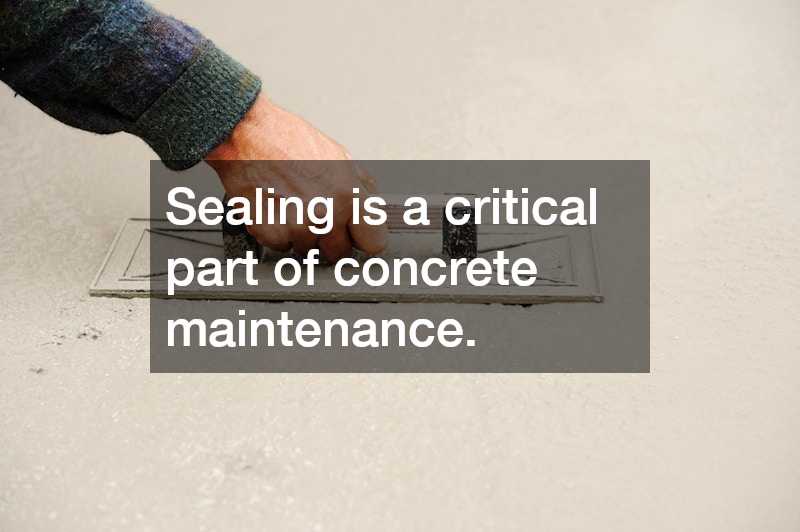
Sealing is a critical part of concrete maintenance that enhances durability, appearance, and long-term value. Through proper preparation, careful product selection, and precise application, contractors ensure lasting results.