Highlights
-
Site preparation establishes the critical foundation for all subsequent construction phases and overall structural integrity.
-
Professional earthmoving ensures proper soil stability and prevents buildings from experiencing disastrous structural failures.
-
Effective grading and drainage solutions protect foundations from immense hydrostatic pressure and devastating water damage.
-
Heavy machinery, operated by experts, is essential for safely navigating steep gradients and complex terrain.
-
Strict adherence to environmental regulations prevents legal issues, ecological harm, and fatal trenching accidents.
-
Utility trenching guarantees the safe, organized placement of essential underground infrastructure for long-term facility usage.
What Role Do Excavation Services Play in Initial Site Preparation?
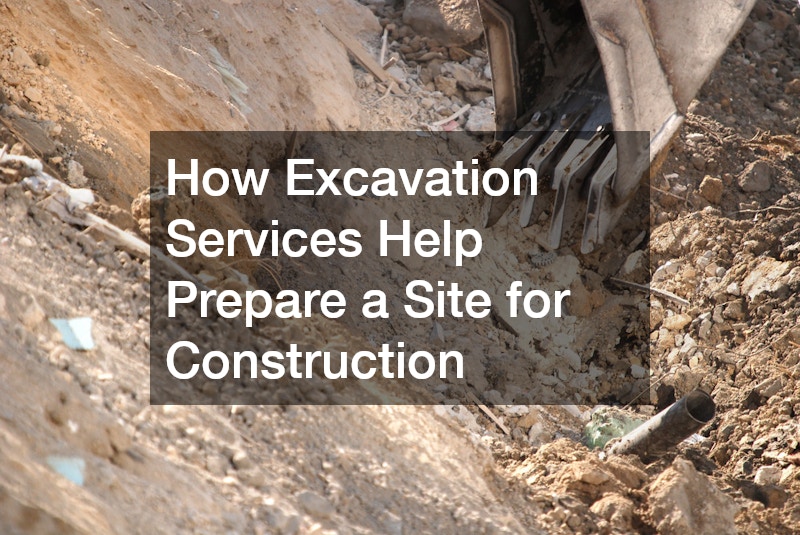
Excavation services play an absolutely foundational role in initial site preparation by clearing the land, moving earth, and establishing a stable base before any actual building begins. In the top-down hierarchy of a construction project, digging and earthmoving are the absolute first steps that dictate the success or failure of the entire architectural endeavor.
Before pouring concrete or framing walls, contractors must remove trees, boulders, debris, and topsoil to reach a solid substrate. Without this preliminary clearing and leveling, subsequent structures would inevitably succumb to shifting ground and uneven settling. Expert operators utilize heavy machinery to sculpt the raw landscape into a precise blueprint-ready canvas, ensuring the terrain matches the architect’s exact topographical specifications.
Why Is Soil Testing and Earthmoving Crucial for Foundation Stability?
Soil testing and earthmoving are crucial for foundation stability because they identify subterranean weaknesses and physically rectify them to support immense structural loads. Geotechnical engineers must evaluate the soil’s composition, moisture content, and load-bearing capacity before any massive digging operations. According to the American Society of Civil Engineers, establishing strict geotechnical guidelines is necessary to evaluate ground conditions and prevent foundation failure before major earthmoving ever begins. If the soil is too sandy, saturated, or full of organic matter, it will simply compress under the weight of a commercial building, leading to disastrous structural failure. Once the soil profile is understood, specialized crews begin the meticulous process of earthmoving, which involves excavating weak layers and replacing them with engineered fill dirt that is rigorously compacted. This compaction process squeezes out air pockets and locks soil particles together, creating a dense, impenetrable base. By addressing these underground variables proactively, developers mitigate the risks of costly foundational cracking, uneven floor settling, and total building collapse.
How Do Contractors Handle Grading and Drainage Issues?
Contractors handle grading and drainage issues by strategically sloping the earth away from the building site to naturally redirect surface water and groundwater safely into designated runoff zones. Proper drainage is a vital component of site preparation, as water accumulation around a foundation exerts immense hydrostatic pressure, which can crack concrete and flood basements. To achieve optimal water management, professionals implement several highly effective techniques during the early site preparation phase:
-
Cutting and filling the landscape to create a minimum five-percent grade sloping seamlessly away from the main structure.
-
Installing subsurface French drains and perforated piping systems to collect and divert underground moisture efficiently.
-
Constructing retention ponds to manage heavy runoff and prevent pollution, a practice mandated by the Environmental Protection Agency to control stormwater discharges from construction activities and protect local waterways.
-
Applying specialized soil compaction methods to prevent future erosion of the newly sculpted terrain.
Through these precise alterations, site crews guarantee that water serves as a manageable environmental factor rather than a destructive force.
What Specialized Equipment Is Required for Complex Terrain?
Complex terrain requires highly specialized equipment, such as tracked excavators, articulated haul trucks, and GPS-guided bulldozers, to efficiently navigate steep gradients, rocky substrates, and muddy conditions. When a construction site features massive boulders, deep ravines, or forested acreage, standard wheeled loaders simply cannot generate the necessary traction. Heavy-duty tracked excavators provide a low center of gravity and wide footprint, allowing operators to safely swing heavy loads of earth on uneven slopes without tipping. Meanwhile, articulated dump trucks are engineered with a hinge between the cab and the dump box, giving them exceptional maneuverability through tight, muddy corridors that would trap rigid-frame vehicles. Furthermore, modern bulldozers integrate satellite grading technology to carve out the terrain to exact millimeter specifications without relying on outdated physical surveying stakes. Deploying this formidable machinery ensures challenging environments are swiftly transformed into viable construction sites.
How Are Environmental and Safety Regulations Maintained During Digging?
Environmental and safety regulations are maintained during digging through rigorous site inspections, robust erosion control measures, and strict adherence to occupational safety standards. Construction sites pose significant risks to ecological systems and human workers if earthmoving activities are not properly managed. In fact, according to the Occupational Safety and Health Administration, implementing strict trenching and excavation safety protocols, such as using protective shoring systems, is legally required to prevent fatal cave-ins. To prevent environmental degradation and protect workers, project managers enforce a comprehensive array of compliance protocols throughout the entire land clearing process:
-
Erecting silt fences and deploying straw wattles to stop loose sediment from washing into sensitive wetland habitats.
-
Utilizing robust trench boxes to physically brace dirt walls, protecting laborers working below grade.
-
Monitoring site air quality and spraying water on dirt roads to suppress hazardous silica dust kicked up by machinery.
-
Securing necessary permits from environmental protection agencies to ensure protected flora and fauna remain undisturbed.
By strictly following these protocols, contractors successfully protect local ecosystems while simultaneously guaranteeing crucial worker safety.
Why Should Project Managers Prioritize Professional Trenching for Utilities?
Project managers should prioritize professional trenching for utilities because precise, expertly dug channels are essential to safely house delicate water, sewer, electrical, and telecommunication lines underground. Haphazard digging often leads to disastrous consequences, including accidentally striking existing municipal pipes or burying new lines at the wrong depth, directly violating local building codes. When experienced crews provide specialized excavation services for utility installations, they use advanced radar tools to map out subterranean obstacles before moving any dirt. They also meticulously calculate the slope of sewer lines to ensure gravity-fed systems flow correctly without backing up.
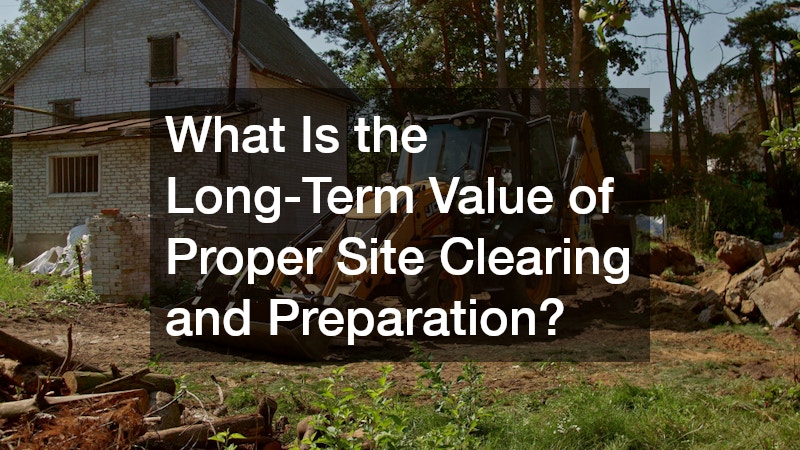
What Is the Long-Term Value of Proper Site Clearing and Preparation?
The long-term value of proper site clearing and preparation lies in its unparalleled ability to prevent catastrophic structural failures, mitigate costly water damage, and ensure the overarching longevity of the building. Ultimately, the most beautiful architecture in the world is entirely useless if it sits upon a shifting, unstable foundation. Investing heavily in the initial phases of earthmoving, grading, and soil compaction pays massive dividends by eliminating the root causes of uneven settling and concrete cracking. When drainage is handled correctly from the start, property owners never have to face the nightmare of flooded basements or rapidly eroded landscaping. Moreover, meticulous utility trenching protects the unseen lifelines of a modern facility, preventing sudden disruptions that can cripple a business or home.